2026 Best Handmade Dog Toys for Wholesale Buyers

Time:2026-09-29 Author:Isabella
0%

Choosing the right products for a 2026 wholesale range requires more than attractive photos. Handmade Dog Toys must combine thoughtful design, dependable materials, and clear production standards. Wholesale buyers need products that look distinctive on shelves and perform reliably in real homes.

This guide examines handmade rope toys, stitched fabric designs, natural rubber pieces, and interactive enrichment products. Each category offers different benefits for retailers, pets, and purchasing teams. A tightly braided cotton toy may suit gentle chewers, while reinforced canvas can better handle daily tugging. However, no material suits every dog. That detail is easy to overlook.

We will consider durability, safety-focused construction, size variety, packaging, minimum order quantities, and supplier communication. Practical questions matter. Can the maker provide material details? Are seams inspected before shipping? Does the packaging explain suitable play conditions? These answers help buyers reduce avoidable returns and build customer trust.

The strongest suppliers usually show consistent workmanship across repeated samples. Small differences can still appear in handmade production. That is part of the appeal, but it also requires honest quality control. Buyers should test representative samples rather than trust one perfect product.

Expect useful comparisons, purchasing checkpoints, and realistic notes about retail potential. Some recommendations may need further testing in your market. That is intentional. A successful wholesale decision should balance craftsmanship, pet appeal, commercial margins, and responsible sourcing. Great toys feel personal. They must also work at scale.
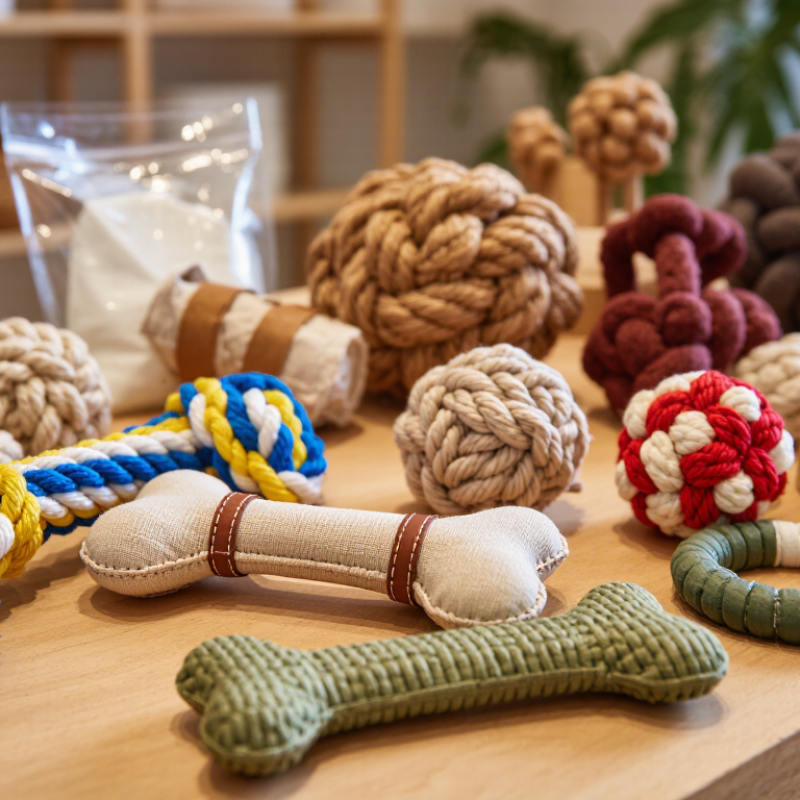
2026 Best Handmade Dog Toys for Wholesale Buyers

What Defines the Best Handmade Dog Toys for Wholesale in 2026

In 2026, the best handmade dog toys for wholesale are charming, consistent, durable, and easy to explain.

APPA’s 2025 State of the Industry report recorded $152 billion in U.S. pet spending for 2024; its 2025 projection was $157 billion. That scale signals opportunity, not guaranteed sales. Buyers should assess repeatability:

Can makers keep dimensions, stitching, color, and lead times steady across a 200-piece order?

A neat sample means little if the next batch varies.

Grand View Research valued the global pet toys market at $8.09 billion in 2023, forecasting 6.7% annual growth through 2030. This outlook favors useful differentiation, not decoration alone.

Strong wholesale candidates use clearly specified fabrics, securely attached features, and seams that withstand realistic chew and pull testing. Ask for material details and relevant test records; “natural” alone does not prove safety.

Handmade does not automatically mean safer. That assumption deserves scrutiny.

Practical design matters at retail.

Choose sizes that fit common shelves, packaging that shows texture, and care instructions buyers can repeat accurately. Offer a small, coherent range, such as a soft tug toy and a textured fetch option.

Confirm minimum order quantities, replacement processes, and realistic production capacity before listing. For small makers, consistency can be the weak spot.

A slight color variation may be charming, but an inconsistent seam is not.

Key Materials and Safety Standards for Handmade Dog Toys

For wholesale buyers, material selection should begin with the dog’s likely play style, not appearance alone. Tightly woven cotton can suit tug toys, while layered fleece offers softness but may fray under persistent chewing. Natural rubber components need clear material specifications and consistent hardness across production batches. Ask suppliers for records covering fiber content, dyes, coatings, and any adhesives. “Non-toxic” is not enough without supporting documentation.

Check the details closely. Seams should stay intact during repeated pulling, and small decorations can become hazards if they detach. Request documented seam and pull tests, plus checks for loose threads, sharp edges, and accessible filling. These checks do not guarantee a toy is safe for every dog. Chewing strength varies, and supervision still matters. For destination markets, confirm applicable product and chemical requirements with a qualified testing provider; there is no single global handmade-dog-toy standard. Keep batch records so concerns can be traced to materials and production dates. A practical sample review may reveal weak stitching, though it cannot replace repeatable testing. Even careful inspection can miss a flaw. That uncertainty deserves honest attention.

Top Handmade Dog Toy Categories for Wholesale Buyers

2026 Best Handmade Dog Toys for Wholesale Buyers

Top Handmade Dog Toy Categories for Wholesale Buyers

Wholesale buyers are prioritizing enrichment, durability, and visible craftsmanship in 2026. APPA’s 2025 State of the Industry report valued U.S. pet spending at over $150 billion in 2024. That scale supports practical, giftable dog toys with clear retail appeal. Handmade puzzle toys, snuffle mats, and treat-dispensing designs fit this demand. They turn feeding time into active play. Buyers should check stitching, fabric recovery, cleaning instructions, and material traceability before placing large orders.

Tug and chew categories remain reliable because they support daily interaction. Rope toys with reinforced knots suit training retailers and outdoor stores. Natural-fiber plush toys offer softer shelf appeal, but stuffing security requires careful inspection. Fetch toys, including washable fabric balls and lightweight flying discs, are easier to merchandise in sets. Grand View Research identifies pet toys as a growing global category, driven partly by rising spending on companion animals. The exact growth rate varies by region.

Personalized and seasonal toys can create stronger wholesale margins. However, custom production may increase lead times and minimum quantities. Handmade variation feels authentic. It can also create inconsistent dimensions. I would request pre-production samples, pull-test records, wash testing, and a small trial order. Buyers should also confirm age guidance and visible care labels. Attractive packaging helps, but safe construction matters more.

2026 Best Handmade Dog Toys for Wholesale Buyers - Top Handmade Dog Toy Categories for Wholesale Buyers

Toy Category Common Materials Typical Construction Useful Size Options Best Suited For Wholesale Quality Checks
Braided Fleece Tug Toys Fleece strips, often polyester Strips braided or knotted into a tug shape; designs may include loops or multiple ends. Short, standard, and long formats for different dog sizes and play styles. Interactive tug and supervised fetch. Check braid consistency, secure knots, loose fibers, and whether the listed material composition is accurate.
Knotted Rope Toys Cotton or cotton-blend rope One or more rope lengths secured with knots; may have a loop or ball-shaped knot. Different rope thicknesses and overall lengths, matched to the intended dog size. Supervised chewing and interactive play; not a substitute for dental care. Inspect knot security, fraying, rope ends, and the toy’s suitability for the target dog size.
Sewn Fabric Plush Toys Woven fabric, polyester fill, and optional squeaker components Fabric panels sewn around stuffing; some designs include squeakers or crinkle material. Small, medium, and large shapes, with dimensions stated for each item. Gentle play and carrying; generally less suitable for dogs that tear toys apart. Review seam strength, attachment points, accessible stuffing, and the security of any squeaker.
Snuffle Mats Fleece or fabric strips attached to a non-slip base Fabric folds and layers create spaces where dry food or treats can be hidden. Compact and larger mat formats; provide finished length and width. Supervised sniffing and food-search enrichment. Check attachment security, base grip, washable-care instructions, and whether the mat is easy to inspect for leftover food.
Treat-Dispensing Fabric Toys Durable fabric, stitched pockets or folds, and optional lining Treats are placed in fabric compartments or folds for a simple search activity. Several formats; list pocket openings and overall dimensions for buyer selection. Supervised enrichment with appropriately sized dry treats. Check stitching, pocket accessibility for cleaning, and clear washing and use instructions.
Crocheted or Knitted Toys Cotton or acrylic yarn; stuffing or sound components may be included. Yarn is worked into a shaped toy; construction and durability vary by stitch, yarn, and design. Small and medium decorative shapes; state dimensions and intended play level. Gentle, supervised play; typically not a choice for persistent or powerful chewers. Look for secure ends and attachments, consistent stitching, and warnings about yarn, stuffing, or small parts.

Buyer note: Handmade dimensions, materials, and construction can vary between makers and batches. Request product specifications and samples before placing a wholesale order. No dog toy is indestructible; supervise play and remove damaged toys.

How to Evaluate Handmade Dog Toy Suppliers and Production Quality

Wholesale buyers need more than attractive stitching. APPA reported U.S. pet industry spending of $147 billion in 2023, showing strong demand but also higher quality expectations. Handmade dog toys should withstand repeated chewing, washing, and rough storage. Ask suppliers for material specifications, production photos, and batch records. Inspect seams closely. Loose threads, uneven stuffing, or sharp hardware indicate weak process control.

A reliable supplier explains material sourcing and testing without hesitation. Request samples from different production batches, not one perfect piece. Check odor, fabric density, stitching strength, and size consistency. For squeaky toys, examine whether the sound unit is fully enclosed. For rope toys, inspect knot security and fiber shedding. ISO 9001-style documentation can support traceability, but certification alone does not prove toy durability. That distinction matters.

Grand View Research has projected continued growth in the global pet toys market through 2030, supported by rising spending on pet enrichment. Growth can tempt factories to increase output too quickly. Ask about daily capacity, worker training, inspection points, and defect rates. I have learned that a beautiful sample can hide inconsistent production. No checklist is perfect. Repeat testing remains necessary. A practical wholesale review should include drop tests, washing tests, pull tests, and aging checks that imitate real household use. Record every failure, even small ones, before approving a 2026 order.

2026 Best Handmade Dog Toys for Wholesale Buyers

How to Evaluate Handmade Dog Toy Suppliers and Production Quality

This illustrative wholesale evaluation model allocates 100 points across practical purchasing criteria. Material safety and construction durability receive the highest weighting because they directly affect pet safety, product returns, and long-term customer satisfaction. Buyers should verify each score through samples, inspection records, compliance documents, and production audits.

Wholesale Pricing, Customization, and Ordering Considerations

For 2026 wholesale buyers, handmade dog toys should be evaluated beyond attractive stitching. Ask for material specifications, production photos, and recent batch samples. Natural cotton rope, tightly woven fabric, and non-toxic dyes require clear documentation. Toy size, seam strength, and filling density should match the dog’s weight range. Small details matter. A squeaker hidden inside may increase appeal, but it can create returns if poorly secured. In my sampling experience, buyers often underestimate packaging volume. That mistake raises freight costs before the order reaches the warehouse.

Wholesale pricing should show more than a unit figure. Request tiered prices, minimum order quantities, tooling charges, sample fees, packaging costs, and shipping terms. A low quote may exclude color changes or individual labels. Customization works best with a written specification sheet. Include dimensions, fabric colors, logo placement, hangtag text, washing guidance, and acceptable measurement tolerance. For example, a 15-centimeter toy with a two-centimeter variation can disrupt shelf presentation. Confirm whether custom colors require larger minimum orders. They often do. Ask for a pre-production sample before approving a full run.

Ordering plans need realistic inspection points. Set sample approval, production completion, and shipment dates in writing. Request photos of packed cartons and carton dimensions before dispatch. Keep a small reserve for defects, because handmade production rarely delivers perfect uniformity. That is not an excuse for weak quality control. Count random units, inspect seams, and check fasteners without overstating safety claims. Buyers should confirm age guidance, care instructions, and responsible-use warnings. I would revise forecasts after every shipment; demand can change, and an attractive toy may sell slower than expected.

FAQS

Which handmade dog toy categories suit wholesale buyers?

Puzzle toys, snuffle mats, and treat-dispensing designs encourage active feeding. Rope toys, washable balls, and fabric discs suit everyday play.

What should buyers inspect on handmade toys?

Check seams, loose threads, stuffing, and knot security. Small details matter. Also review fabric recovery, cleaning instructions, and material records.

How can buyers assess a supplier’s consistency?

Request samples from several batches, not just one polished sample. Compare odor, dimensions, fabric density, and stitching strength. One sample can mislead.

What tests are useful before approving an order?

Try pull, wash, and aging tests that reflect household use. Record small failures too. I might still miss something.

What should a wholesale quote include?

Ask for unit prices, order minimums, sample fees, packaging costs, and shipping terms. Confirm whether color changes or labels cost extra.

How should buyers specify custom toys?

Write down dimensions, colors, label placement, care text, and measurement tolerance. A 15-centimeter toy with a two-centimeter variation may look uneven on shelves.

Can customization affect delivery plans?

Yes. Custom colors may require larger minimums, while made-to-order details can extend lead times. Approve a pre-production sample before the full run.

What should buyers check before shipment?

Confirm production and shipment dates, then request carton photos and dimensions. Inspect random units and keep a small reserve for defects. Handmade variation happens.

Conclusion

In 2026, the best Handmade Dog Toys for wholesale combine engaging designs, dependable construction, and practical value for retailers. Buyers should consider how each toy suits different play styles, sizes, and chewing habits, while looking for durable stitching, secure components, and materials that are easy to inspect and care for. Common wholesale categories may include tug toys, soft plush toys, rope toys, and interactive options, giving retailers a balanced selection for varied customer needs.

Evaluating suppliers means reviewing sample quality, consistency between samples and production runs, clear material information, and realistic lead times. Buyers should also compare wholesale pricing, minimum order quantities, packaging choices, and options for customization, such as colors or simple design variations. Careful questions about quality checks and order communication can help prevent surprises. By balancing safety-conscious material choices, useful assortment planning, and transparent ordering terms, wholesale buyers can build a thoughtful collection that serves both retailers and their customers.


Isabella

Isabella

Isabella is a dedicated marketing professional with a sharp focus on driving brand growth and engagement through strategic content creation. With an extensive background in digital marketing, she combines her passion for storytelling with her keen understanding of industry trends to deliver......